By Chanda Chatham, Sterisil Director of Education
Dental assistants manage countless tasks throughout the day. Worrying about dental unit waterline safety should not be one of them. Clean water is non-negotiable for patient safety, yet maintaining those lines can often feel tedious and expensive.
Bacteria love to find places to stick. Left untreated, they build complex communities known as biofilm inside your waterlines. Think of biofilm like high-rise apartment buildings for bacteria. You want to stop these structures from forming in the first place.
Fortunately, maintaining clean waterlines does not have to be a complicated chore. By leveraging advanced technology and straightforward protocols, dental practices can achieve exceptional water quality with minimal effort. Here is what you need to know about keeping your waterlines safe, efficient, and compliant.
Introduction to Waterline Safety
Before introducing any continuous treatment into your waterlines, you must start with a clean slate. If you skip this crucial step, you likely already have established biofilm communities living inside your equipment.
Routinely shocking your lines breaks down the framework of these bacterial high-rises before they become solid, dangerous structures. You must remove existing biofilm using a dedicated, approved biofilm remover. Once you clear out the existing bacteria, you can safely introduce a low-level antimicrobial treatment to keep the lines clean.
Consistency is the secret to effective waterline maintenance. You do not want fluctuations in your treatment levels. Drops in antimicrobial presence give bacteria the perfect opportunity to stick to the lines and rebuild their communities. Continuous, reliable treatment ensures bacteria stay at the lowest possible levels.

The Role of Silver Ion Technology
When it comes to continuous treatment, silver ion technology stands out as the gold standard. This method is so effective that both NASA and the International Space Station rely on it for their water treatment systems. If it works for astronauts in space, it is certainly up to the task for your dental practice.
Silver has a unique, rough edge that naturally seeks out bacteria. When it finds a bacterial cell, it breaks down the cell wall—delivering what experts call the “hug of death.” This mechanism destroys the bacteria efficiently and safely. Best of all, silver is non-oxidizing. It leaves behind no taste, no odor, and no residue, making it completely unnoticeable to your patients.
The Sterisil® Straw utilizes this exact silver ion technology to provide a 365-day extended release. This continuous release guarantees that the silver ion exchange happens at a controlled, consistent level for an entire year. You simply leave the straw in the water bottle 24/7. Whether your office is open every day or closed for a long holiday weekend, the silver is always present and actively treating the water.
How Total Dissolved Solids Effect Your Waterline Safety
Local water quality also plays a role in how bacteria behave. High Total Dissolved Solids (TDS) means your water contains many particulates. Bacteria easily bind to these particulates to start building biofilm. Sterisil® addresses this by offering specialized straws tailored for both high TDS and low TDS water, ensuring optimal treatment regardless of your local water quality.
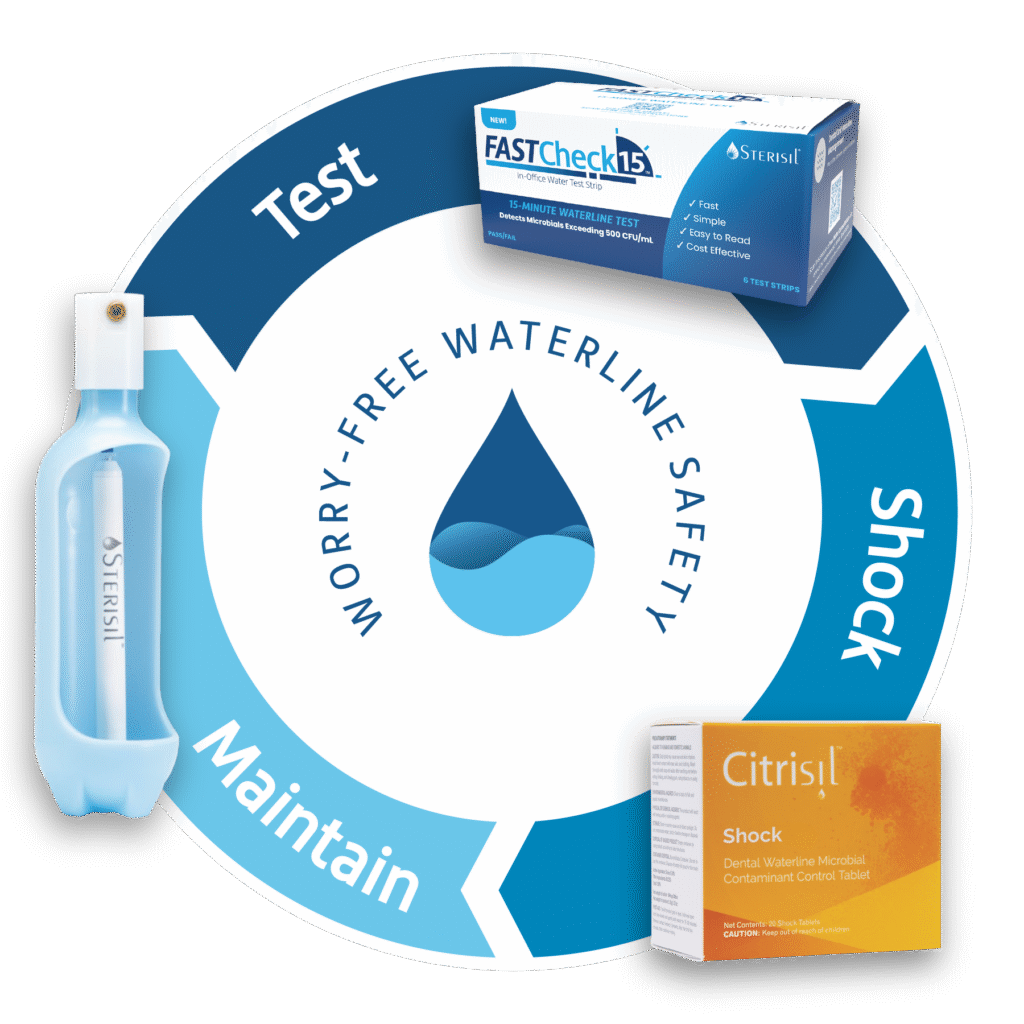
Sterisil’s Comprehensive SAFEWater Solution
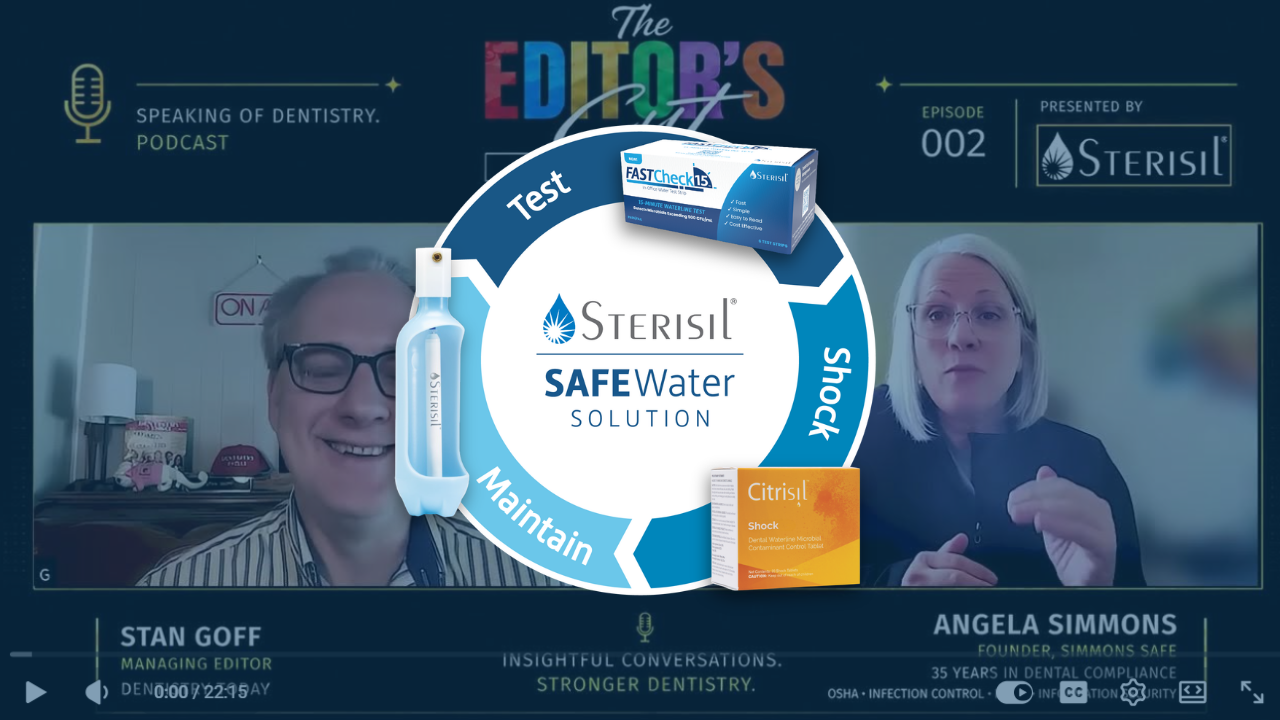
Effective waterline safety requires a system of products that work together. The Sterisil® SAFEWater Solution brings testing, shocking, and maintenance into one efficient, streamlined protocol.
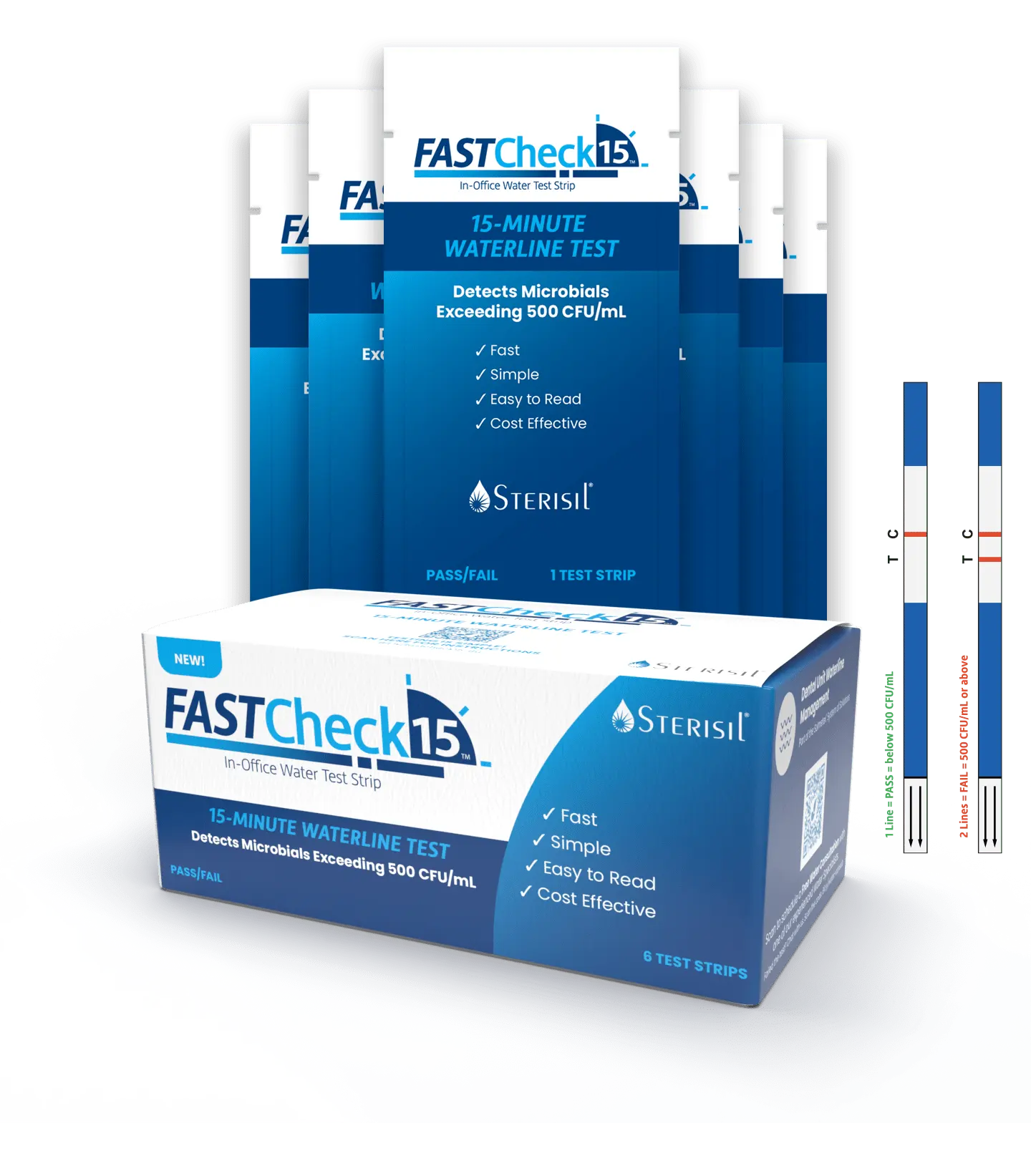
Step 1: Test
First, you need to verify that your protocols are working. FASTCheck15® is the only 15-minute waterline test strip on the market, delivering a simple pass-or-fail result. Your team can run the test during the morning huddle or right after the last patient leaves, giving you quick confidence in your water quality.
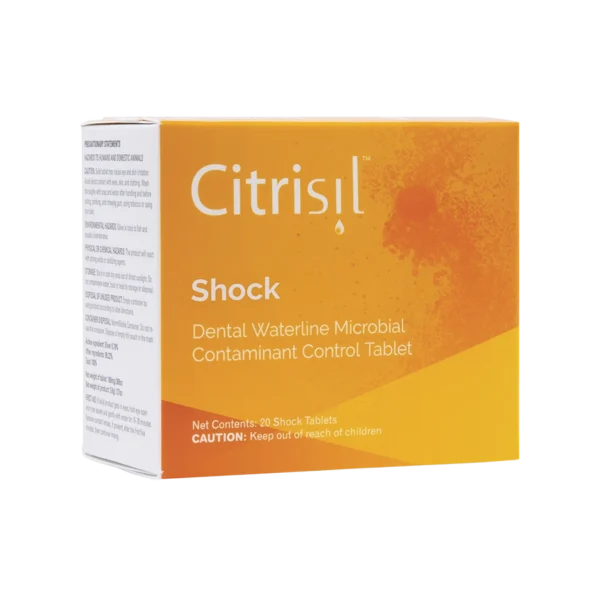
Step 2: Shock
If shocking is needed, Citrisil™ Shock makes the process simple. Instead of mixing messy liquids or spending up to $15 per treatment on expensive cases of shock, you just drop in a tablet. At roughly $2.40 per tablet, it is also highly affordable. Drop the tablet in, swish it around to help clean the bottle, and leave it in the lines overnight. If your practice closes for an extended period, Citrisil™ Shock can remain in the lines to continue treating bacteria while you are away.

Step 3: Maintain
For ongoing daily maintenance, the Sterisil® Straw provides continuous treatment. Because the products are fully compatible and use the same silver ion technology, you do not need to remove the straw when shocking the lines. You can leave it right in the bottle, saving your team time and eliminating extra steps, including the need to dry the bottle every day.
Why EPA Registration Matters for Waterline Safety
Using just any chemical to clean your waterlines puts your practice and your patients at risk. Products used in dental waterlines must be registered with the Environmental Protection Agency (EPA) specifically for that purpose.
An EPA registration means the product has been thoroughly vetted and includes specific Instructions for Use (IFU) for waterlines. Everyday household items like diluted bleach might kill bacteria, but they do not come with an IFU for dental waterlines. Using unregistered products can leave harmful residues that may ultimately end up in a patient’s mouth.
The EPA Drinking Water Standard
The EPA sets the drinking water standard limit at 500 Colony Forming Units (CFU). Your waterline treatment protocol must keep bacteria below this threshold. The Sterisil® Straw goes far beyond that requirement. It is the only straw EPA-registered to treat water at or below 10 CFU/mL, reducing bacteria to near-zero levels.
Testing is just as important. FASTCheck15® gives practices a simple, rapid way to verify that their protocol is working, with a clear pass-or-fail result in just 15 minutes. That speed makes it easier to monitor water quality regularly, catch problems early, and take action quickly when needed. For practices that also want laboratory confirmation, Sterisil® offers R2A testing through an independent, EPA-certified lab, along with a fast-read alert if a sample fails at the 24-hour mark.
Waterline safety does not need to drain your practice’s time or budget. By combining EPA-registered products, innovative silver ion technology, and routine testing with FASTCheck15®, you can create a safer environment for every patient who sits in your chair. Evaluate your current waterline protocols today and consider upgrading to a simple, comprehensive solution that does the heavy lifting for you.