Por Michelle Strange, MSDH, RDH
The Hidden Dangers in Your Dental Waterlines
Would you be surprised to learn that the water in a standard toilet bowl might be cleaner than the water flowing through a dental practice’s waterlines?
As startling as that sounds, without proper protocols, dental waterlines can quickly become breeding grounds for dangerous bacteria. In a recent discussion hosted by Kevin Henry of DrBicuspid.com and Dental Assistant Nation, Michelle Strange, MSDH, RDH, a dental hygienist with 26 years of experience, shared crucial insights on waterline safety.
Whether you use distilled water or tap water, the source is rarely the issue. The real problem lies within the waterlines themselves. Biofilm builds up inside the narrow tubing, putting both patients and dental professionals at risk of exposure to harmful pathogens. Here is a closer look at why testing matters, how to shock your lines properly, and why establishing clear procedures can prevent tragic outbreaks.
Why Testing Dental Waterlines Is Crucial
We treat patients because we care about their health. Using safe, clean water is a fundamental part of providing quality dental care. When waterlines are not properly maintained, bacteria multiply and form biofilm. That biofilm contaminates the water that sprays into the patient’s mouth and aerosolizes into the treatment room, increasing exposure risk for both the patient in the chair and the clinician holding the instrument.
To help ensure safety, dental water must consistently measure below 500 Colony-Forming Units (CFU), which is the standard for safe drinking water set by the EPA. Achieving and maintaining this level requires a strict, ongoing protocol.
The SAFEWater Solution: Testing Before Shocking
A common point of confusion in many dental practices is the sequence of testing and shocking: Do you test first, or shock first?
You must always test your waterlines before you shock them.
Think of your daily waterline maintenance like a patient brushing and flossing at home, while shocking the lines is like professional periodontal maintenance. Testing shows whether your daily routine is actually working. If you shock the lines and immediately test them, you will pass every time. You simply get the answers to the test without verifying if your daily maintenance protocol is effective.
A robust SAFEWater Protocol involves:
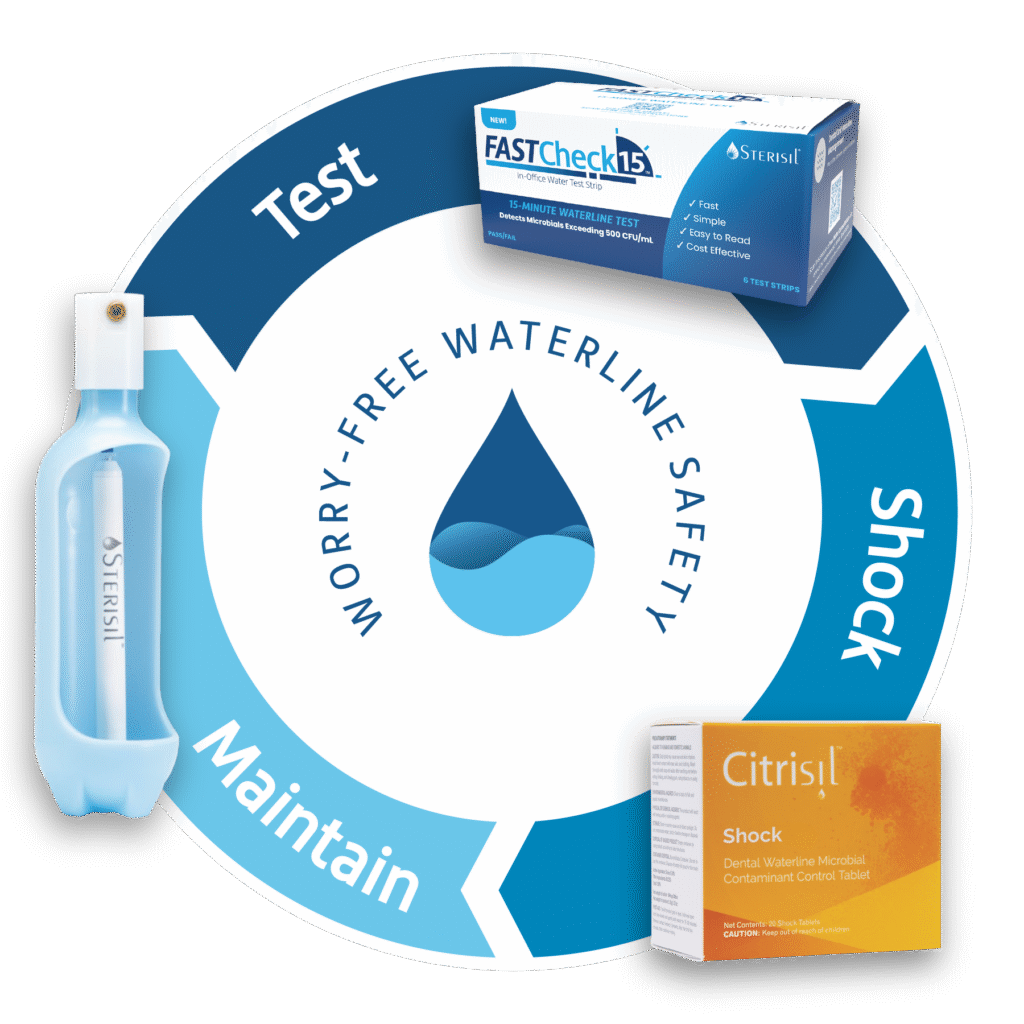
- Monthly Testing: Use tools like the FASTCheck15® to monitor water quality on a regular basis.
- Quarterly Lab Testing: Send water samples to a third-party lab every quarter to detect slow-growing bacteria using the Sterisil® R2A with FASTRead™ mail-in waterline test.
- Routine Shocking: Perform routine shocking with Citrisil™ Shock regardless of test results, as biofilm can quickly shift water quality in the wrong direction.
Routine vs Remediation Shocking
Routine shocking maintains your baseline safety, but remediation shocking comes into play when a waterline fails a test.
If you fail a test, you must shock the lines. However, you cannot just perform the shock and hope the problem goes away. You need to document the failure and prove that your corrective actions worked. After remediation shocking, wait three to five days, and then test the water again. If it fails a second time, you may need to shock multiple nights in a row or switch to a stronger shock product until you achieve a passing result.
Streamlining Safety with Standard Operating Procedures
Human error happens. When dental professionals run behind schedule, the temptation to cut corners grows. Standard Operating Procedures (SOPs) help keep everyone on the same page by ensuring every team member follows the exact same steps to maintain waterline safety.
Writing and following SOPs becomes significantly easier when you use compatible products that reduce the number of steps required. For example, the Sterisil® SAFEWater Solution allows teams to shock the lines without removing the Sterisil® Straw. Because the Citrisil™ Shock tablet is fully compatible with the Sterisil® Straw still attached to the water bottle, you eliminate a cumbersome step.
When you reduce the number of steps required, compliance becomes easier. You no longer have to worry about staff members damaging straws, using the wrong products, or skipping parts of the protocol when the day gets busy.
Never Compromise on Water Quality
The United States has seen multiple severe bacterial outbreaks linked to dental waterlines, leaving children severely ill. No dental professional enters the field intending to put patients at risk, but ignoring waterline maintenance can have devastating consequences. By using the right products, following efficient SOPs, and understanding the vital relationship between testing and shocking, practices can ensure a safe environment for both patients and staff.