In every dental practice, suction is essential. Yet one of the most reliable indicators of system performance is often overlooked: the amalgam separator.
Far more than a regulatory requirement, your amalgam separator provides a real-time view into your dental vacuum line health. What you see—or smell—inside it can tell you exactly how well your evacuation system is functioning
A Built-In Diagnostic Tool
Most evacuation systems carry a constant flow of biologic, chemical, and procedural waste from the operatory to the central vacuum. Along the way, debris adheres to the inner walls of narrow tubing. Over time, this accumulation forms biofilm—a sticky matrix that captures additional particles and restricts flow.
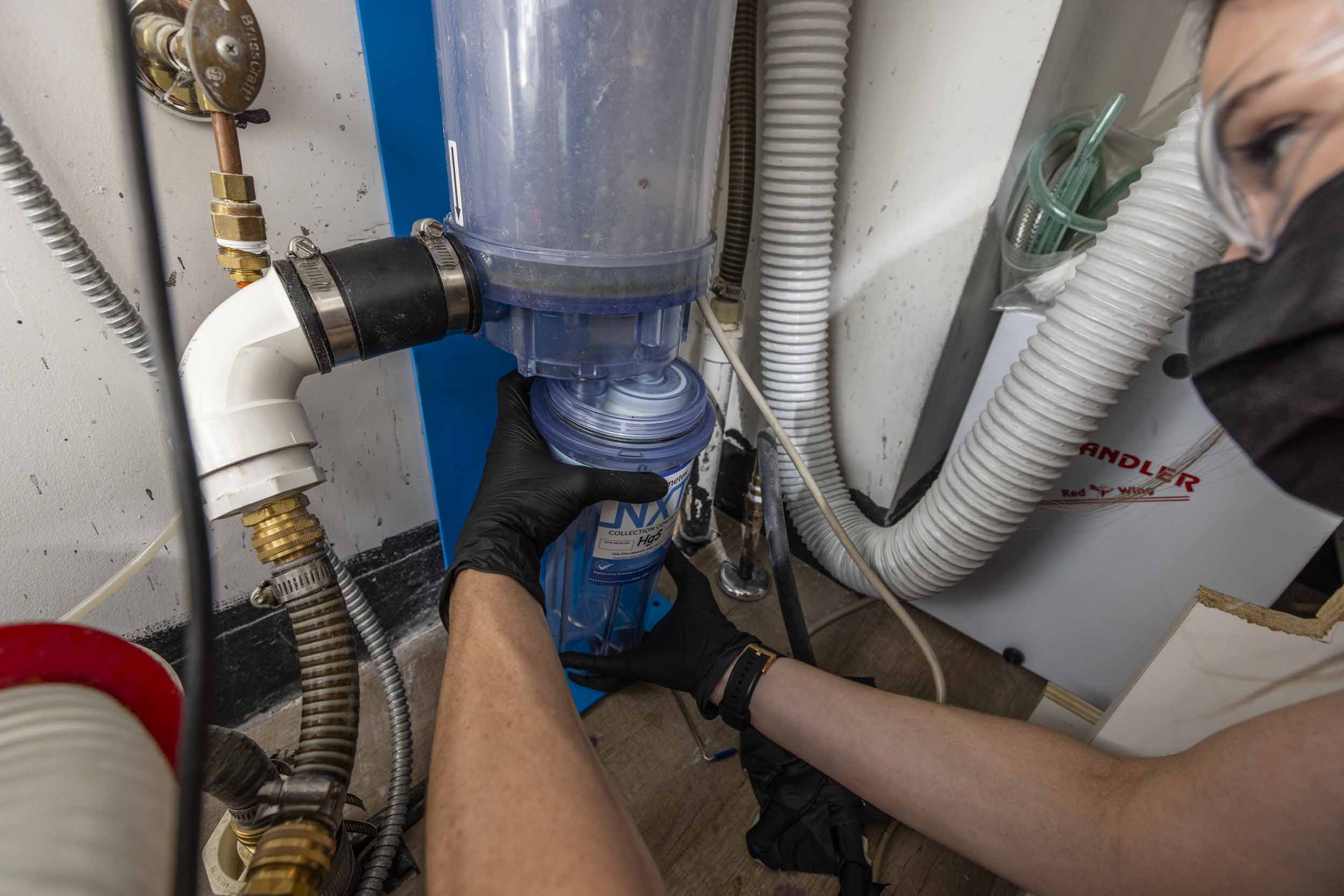
Because all of this material ultimately passes through the amalgam separator, the unit acts as a natural checkpoint. Clear-bodied separator systems like the NXT Hg5 make it easy to visually assess conditions inside your vacuum lines.
Hint: the best time to check your amalgam separator is in the morning when sediment is settled and your vacuum line cleaner has had a chance to work.

What a Healthy System Looks Like
- Water you can see through – tinted is ok.
- Sediment settled at the bottom
- Little to no odor
Warning Signs of Trouble
- Cloudy or opaque water
- Thick, “fluffy” sludge or biofilm accumulation
- Persistent or unpleasant odors
If these warning signs are present, the issue is likely not isolated to the separator—it may reflect buildup throughout your suction lines.
Why Vacuum Line Health Matters
Vacuum line buildup begins at the chair but affects the entire system. As biofilm thickens, it narrows the effective diameter of tubing and reduces airflow.
This can lead to:
- Gradual loss of suction strength across operatories
- Reduced efficiency of HVE and LVE devices
- Increased strain on vacuum motors and components
- Shortened lifespan of costly equipment
One of the biggest challenges is that suction loss happens slowly. Teams may adapt to declining performance without realizing there is an issue.
The Role of Your Vacuum Line Cleaner
If buildup is visible in your amalgam separator, it is often a sign that your vacuum line cleaner is underperforming.
This may be due to:
- Underperforming cleaning products
- Inconsistent cleaning protocols
- Over-dilution of cleaning solutions or mixing products
- Using products not designed for dental-specific waste conditions
Additionally, many traditional enzymatic cleaners rely on certain enzymes to break down organic material. However, in real-world dental environments, even trace amounts of mercury can interfere with this process—reducing cleaning effectiveness precisely where it is needed most.
Why Non-Foaming Technology Matters
An often-overlooked factor in vacuum line cleaning is foam.
While foaming products may appear active, excessive or persistent foam can limit cleaning performance. In a suction-based system, it disrupts fluid flow and reduces consistent contact between the cleaner and the inner surfaces of tubing—where biofilm resides.
It’s worth noting that most vacuum line cleaners generate some bubbles when aerated with a specialized dispenser. The key difference is how those bubbles behave. Foam that remains stable throughout the system can interfere with air–liquid separation and may be drawn into the vacuum unit, where excess moisture can contribute to performance issues.
In contrast, well-designed formulations produce controlled, short-lived bubbles that dissipate quickly. This allows the cleaner to activate as it moves efficiently through the lines while maintaining consistent surface contact.
These engineered formulations support:
- Smooth, uninterrupted flow
- Better contact with pipe walls
- More consistent delivery of active ingredients
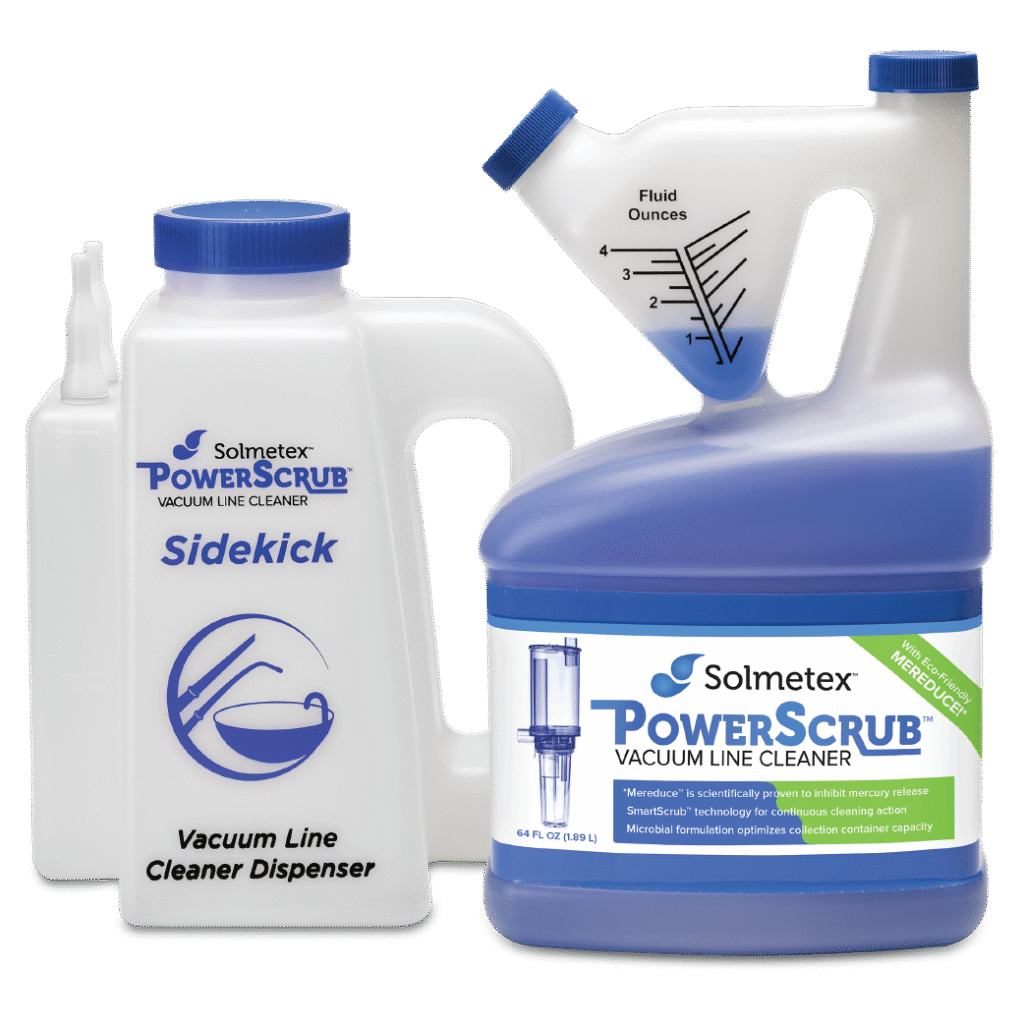
PowerScrub takes this a step further with patented nanobubble technology. The nanobubbles help deliver active ingredients directly to biofilm, improving cleaning efficiency without disrupting vacuum performance.
Compliance Considerations
Vacuum line cleaning is not only about performance. It also plays a role in regulatory compliance.
Under the EPA Dental Rule, evacuation line cleaners must maintain a neutral pH (between 6 and 8). Products that are too acidic or oxidative—such as bleach, chlorine, or peroxide—can release trapped mercury into wastewater systems, creating environmental risk.
Inspectors may ask which cleaner your practice uses, making it essential to select a compliant solution and follow proper protocols.

A Simple Check That Makes a Difference
Checking your amalgam separator takes only a few moments but can reveal critical information about your system.
By incorporating routine visual inspections into your workflow, you can:
- Identify buildup early
- Adjust cleaning protocols as needed
- Prevent costly equipment issues
- Maintain consistent suction performance
Protecting Performance and Compliance
Your amalgam separator is more than a maintenance requirement—it is a practical, everyday diagnostic tool.
When paired with an effective, non-foaming vacuum line cleaner and a consistent cleaning protocol, it enables you to maintain optimal dental vacuum line health, protect your equipment, and support compliance.
FAQ: Dental Vacuum Line Health & Cleaning
Check your amalgam separator. Cloudy water, visible sludge, or strong odors are common signs of biofilm buildup in your vacuum lines.
Most manufacturers and clinical guidelines recommend cleaning at least once daily, typically at the end of the day. Additional cleaning may be appropriate after procedures involving blood. Always follow the manufacturer’s IFU.
Gradual biofilm accumulation inside vacuum lines restricts airflow, reducing suction efficiency across operatories.
Foaming cleaners can limit surface contact within suction lines, reducing their ability to remove biofilm effectively compared to non-foaming alternatives.
No. Bleach and other oxidizing cleaners are not recommended and may violate EPA Dental Rule guidelines due to their potential to release mercury into wastewater.
Look for a non-foaming, dental-specific cleaner that:
– Maintains neutral pH (6–8)
– Effectively breaks down biofilm
– Performs in the presence of mercury
– Is easy to integrate into daily protocols